- D2C Caffeine
- Posts
- CAC Isn’t Rising. Your Stack Isn’t Thinking in Real-Time.
CAC Isn’t Rising. Your Stack Isn’t Thinking in Real-Time.
CAC, Retention & ROI: Why Real-Time Infrastructure is a Necessity

Pragma (formerly Logisy)
March 02, 2026

A regular dose of D2C-centric resources & tools for Growing Brands, Startups & Entrepreneurs.
CAC Isn’t Rising. Your Stack Isn’t Thinking in Real-Time.


Two brands. Same category. Similar AOV. Similar ad budgets.
One is sitting at 4.5x blended ROAS.
The other is struggling at 2.2x.
Both complain that “CAC has gone up.” (partially true)
But when you isolate traffic cost, the difference isn’t dramatic enough to explain the gap.
So what’s actually happening? The answer is boring. And brutal.
One brand is making decisions in milliseconds.
The other is making them in spreadsheets.
Let’s dig deeper..
CAC, Retention & ROI: Why Real-Time Infrastructure is a Necessity
The Real Equation: ROI Is a Time-Sensitive Variable

That’s simplistic.
In Indian D2C, ROI is determined by:
How much of your paid traffic converts into delivered revenue
How much of that delivered revenue is retained (not refunded)
How much of that customer returns to purchase again
If you compress it, ROI depends on three layers:
Acquisition Efficiency (CAC vs Realised Revenue)
Leakage Control (RTO, cancellations, refunds)
Retention Acceleration (repeat purchase velocity)
Each of these layers is sensitive to reaction time.
Let’s examine how…
Real-Time Decisions That Compress CAC
CAC feels high when realised revenue per acquired session is low.
That usually happens because too many orders:
Cancel
RTO
Refund
Fail payment
These are not media issues. They are decision issues.

1. Real-Time Risk Filtering at Checkout
When a user hits checkout, your system already knows:
Pincode delivery success history
SKU-level RTO behaviour
Customer’s past order reliability
Sale-window volatility
Inventory depth in dispatch centre
If you approve all orders uniformly, you’re approving risk blindly.
With real-time checkout intelligence:
COD is conditionally exposed based on SKU + pincode + customer behaviour.
Payment sequencing adapts to maximise prepaid success probability.
Order value thresholds adjust dynamically.
High-margin, deep-stock upsells bias revenue toward safer fulfilment combinations.
Across brands implementing real-time payment logic:
Metric | Static | Real-Time |
COD Share | 60–65% | 48–52% |
RTO | 28–32% | 18–22% |
AOV | Baseline | +6–11% |
Effective CAC | Baseline | -12–18% |
Impact on ROI:
More delivered orders.
Higher revenue per order.
Lower acquisition cost as % of revenue.
That is direct ROI expansion without increasing traffic.
2. Real-Time Inventory Intelligence That Prevents Revenue Waste
India’s sale velocity is unpredictable.
A SKU can spike to 40+ units per minute.
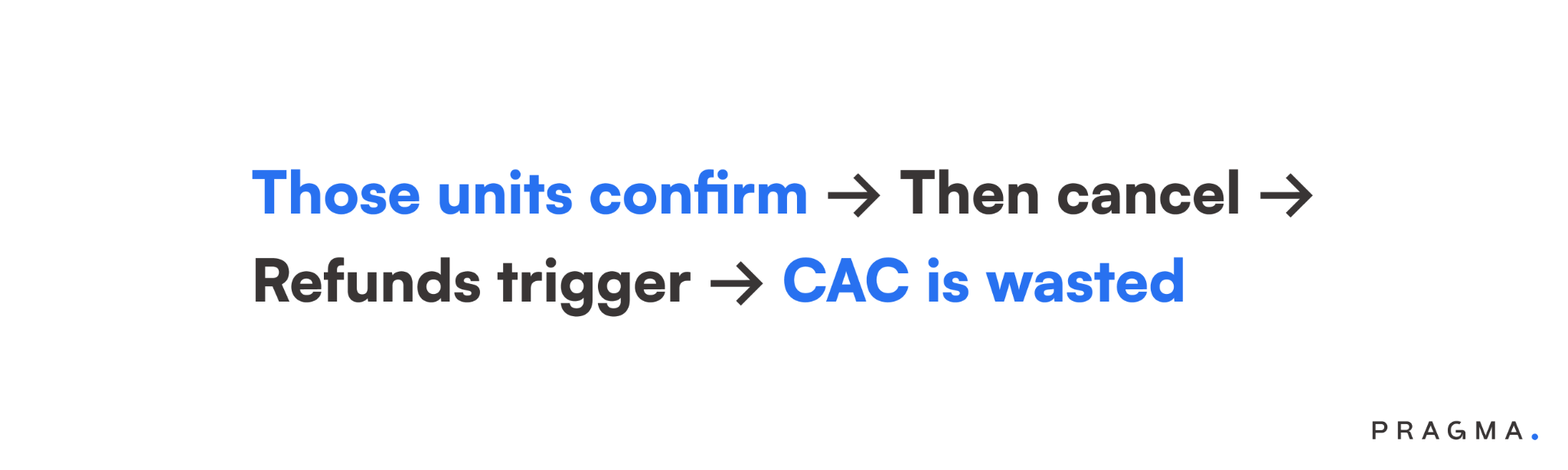
If stock sync lags 3 minutes, you oversell 100+ units.
Real-time warehouse sync ensures:
Dispatch-centre-level availability is accurate.
Orders route dynamically to available stock.
Courier lanes are evaluated before allocation.
High-risk routes are deprioritised instantly.
Brands running live sync + routing intelligence saw:
22–28% reduction in sale-day cancellations
6–9% logistics cost reduction
Lower post-dispatch RTO
Impact on ROI:
You stop burning paid traffic on phantom inventory. Realised revenue rises without increasing spend.
3. Real-Time NDR Automation That Protects Paid Demand
Delivery failures in India are not rare. But recovery probability decays sharply with time.
If NDR outreach happens hours later, the customer disengages.
Real-time NDR automation:
Instant WhatsApp on first failed attempt
Slot rescheduling within minutes
Risk-based prepaid nudges
AI-assisted escalation if needed
Observed outcomes:
18–24% higher reattempt success rate
10–16% lower RTO
Faster cash cycle
Impact on ROI:
Orders you already paid to acquire convert into revenue instead of loss.

4. Real-Time Return Steering That Drives Retention
Refund-to-source kills ROI.
It eliminates contribution margin and often ends the customer relationship.
A real-time returns engine evaluates:
Customer LTV band
Return reason
SKU resale probability
Margin structure
Inventory health
Then dynamically prioritises:
Exchange-first incentives
Store credit bonuses
Upgrade nudges
Brands using exchange-intelligent steering converted 27–41% of refund requests into exchanges.
Impact on ROI:
Revenue is retained.
Customer relationship continues.
Repeat probability increases.

5. Real-Time Communication That Accelerates Repeat Purchases
Retention is often treated as a campaign calendar problem.
It’s not. It’s a timing problem.
If communication reacts to:
Delivery confirmation
Exchange completion
Category lifecycle timing
SKU usage window
High-LTV behaviour triggers
Then repeat purchase velocity accelerates.
Instead of sending generic “we miss you” flows, real-time behaviour-based nudges:
Trigger cross-sell within optimal repurchase window.
Promote replenishment based on SKU lifecycle.
Offer upgrade nudges after successful exchange.
Impact on ROI:
Lower dependence on paid reacquisition.
Higher LTV.
Better blended ROAS.
6. Real-Time Cost Visibility That Protects Contribution (Cost Analytics)
Most brands measure revenue.
Few measure contribution at shipment level in real time.
When shipping cost spikes in certain lanes or courier performance degrades, margin erodes quietly.
Shipment-level cost analytics allows:
Zone/Pincode-level optimisation
Courier renegotiation based on data
Risk-based routing adjustments
SKU profitability recalibration
Impact on ROI:
Contribution stabilises.
You stop subsidising unprofitable lanes.
Acquisition spend aligns with profitable delivery zones.
Why This Compounds in India?
India amplifies inefficiency because:
COD share is significant.
Courier performance is inconsistent.
Sale velocity is extreme.
Return elasticity is high.
Pincode-level behaviour varies dramatically.
Static logic in such a market inflates CAC and suppresses retention.

Pragma’s Real-Time Stack vs Static Stack
Static stack: Acquire → Confirm → Dispatch → React

Across Pragma’s ecosystem:
1Checkout & RTO Suite → dynamic payment, upsell, COD risk
ShipAxis → live warehouse sync, routing, NDR automation, Cost analytics (shipment-level margin visibility)
Omnichannel CRM & Journey Management System (JMS) → instant behavioural nudges
Return Management System (RMS) → exchange-first decision logic
Genie (AI Copilot) → human response acceleration
When these layers operate in isolation, leakage accumulates.
When they operate in real time, margin stabilises.

That’s the end of our talk on “CAC, Retention & ROI: Why Real-Time Infrastructure is a Necessity.”...
☕ See you on the next coffee date!

How did you like our Newsletter? What topic would you like us to cover next?
Reply and let us know! 😊